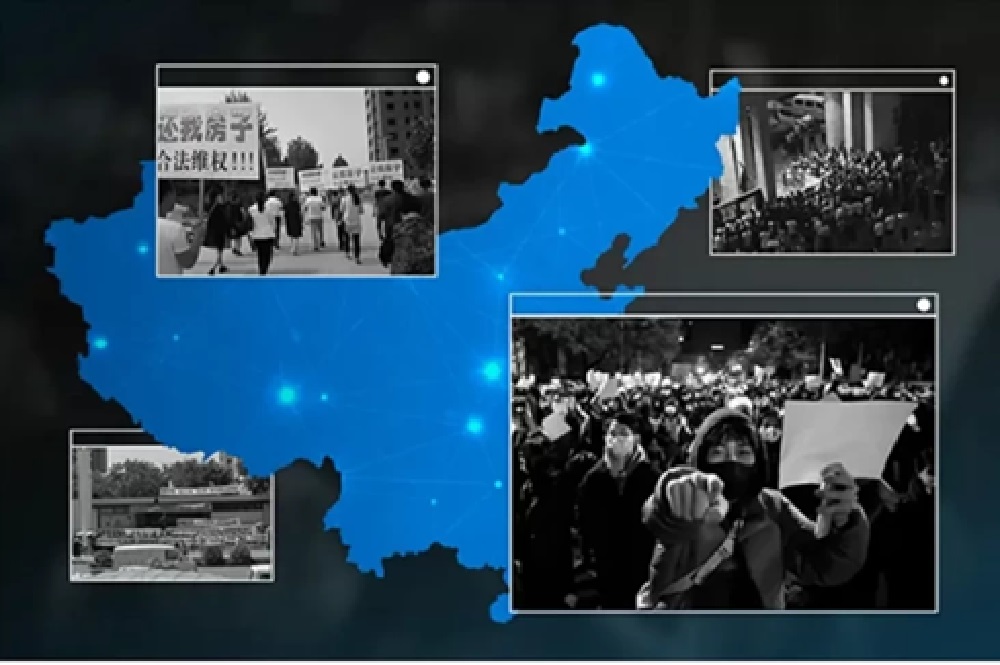

CorongNews – Social unrest in rural China has sharply increased amid a prolonged economic slowdown and persistent structural challenges. Throughout 2025, protests in villages surged, signaling escalating social tensions that are no longer confined to urban centers.
According to Hamrakura on Saturday (Jan 17, 2026), this rise in protests has been driven by a combination of economic pressure, land disputes, and local grievances against regional government policies.
In many rural areas, state policies are perceived to clash with longstanding traditions, historical land rights, and social norms deeply embedded in local communities.
Surge in Rural Protests in 2025
Independent monitoring data highlights deteriorating social stability in China’s hinterlands. The China Dissent Monitor (CDM), an independent project affiliated with Freedom House, recorded approximately 661 rural protest incidents during the first 11 months of 2025, a roughly 70% increase compared to 2024.
This surge is part of a broader trend of growing discontent. In the third quarter of 2025 alone, CDM reported 1,392 protest events across China, a 45% year-on-year increase and marking the sixth consecutive quarter of rising protest activity. Rural residents now represent a growing share of public dissent, joining workers, homeowners, and other social groups in voicing concerns over economic pressures and social policies.
Economic Slowdown and Migrant Workers Returning Home
The rise in rural protests coincides with China’s overall economic slowdown. Weakening industrial growth, declining investment, and shrinking urban job opportunities have prompted many migrant workers to return to their hometowns. Yet, their return often comes without adequate employment opportunities or sustainable livelihoods.
Singapore-based Mandarin-language daily Lianhe Zaobao reported that Chinese authorities are concerned about a potential “mass return of migrant workers settling in rural areas.” This policy language sparked public anxiety and widespread discussion about rural economic stagnation.
Unlike urban centers, which offer diverse industrial and employment options, rural China primarily relies on agriculture and informal work. This dependency makes rural populations far more vulnerable to economic downturns. Many returning workers find themselves without farmland, harvests, or steady income—factors that repeatedly trigger protests.
Land Disputes and Cultural Conflicts
Beyond economic pressure, land disputes and clashes between local policies and traditional customs have been major triggers for protests in 2025. In Lingao County and Fuchuan County, the demolition of privately built temples and clan ancestral halls sparked violent confrontations between residents and authorities.
For local communities, these structures symbolize cultural identity and communal heritage. Their destruction became a flashpoint for broader dissatisfaction with local governance and land management practices.
A similar situation occurred in Xifeng County, where a local policy mandating cremation of the deceased faced strong resistance for violating long-standing burial traditions. The enforcement of such policies was perceived as an attack on local cultural values, sparking collective protests.
Persistent Structural Issues
Economists and sociologists argue that rural unrest in China is deeply rooted in long-standing structural issues, including land expropriation, forced relocation, and urban-rural economic disparities. The 2025 protests essentially echo patterns of dissatisfaction seen over previous years.
In many areas, farmland and communal land, once a safety net for returning workers, have been repurposed for industrial or commercial development. Consequently, residents returning to their villages face increasing economic uncertainty and social frustration.
Governance Challenges and Government Response
Beyond land and cultural issues, the wide range of protest triggers—including employment, housing, and education—reflects growing dissatisfaction with local governance practices. Rural activism, once sporadic and isolated, is now part of a broader pattern of public expression against perceived injustice.
The Chinese government continues to respond with a combination of targeted enforcement, security measures, and information control. Its grid-based social management system remains the primary tool for monitoring and mitigating potential unrest.
However, the rising number of protests demonstrates that grassroots grievances continue to emerge, sometimes bypassing official information controls. Independent monitoring organizations like CDM rely on public reports and social media signals to provide a fuller picture of social discontent not reflected in official channels.
Deepening Social Tensions
The surge of rural protests in 2025 underscores how economic slowdown, stagnant incomes, and rising living costs interact with long-standing structural issues. In regions lagging behind in economic revitalization, grassroots dissatisfaction continues to manifest through collective action, even at the risk of government crackdowns.
This development exposes deepening social fault lines in China, where economic pressures intersect with demographic changes, cultural norms, and local governance conflicts. As rural protests grow in number and variety, grassroots resistance is increasingly becoming an enduring feature of China’s socio-economic landscape.*
V)